
NextStair
Ad
ElevenLabs: AI Voice Generator | Sign Up Now FREE
Try Now

Best Dropshipping Tools 2026

Discover dropshipping tools and supplier platforms that let online sellers list products and fulfill orders without holding inventory - the supplier ships directly to the customer. Dropshipping reduces startup capital requirements but compresses margins. Compare supplier product quality, shipping times, automation for order fulfillment, Shopify/WooCommerce integration, and niche supplier availability.

9 tools
Showing 1–9 of 9 tools
Dropmagic - Complete Shopify Stores in Minutes

Build winning Shopify stores with AI in minutes

Spytrends.net - Spot Products Before They Go Viral

Find winning dropshipping products before they go viral

Nivroo - Dropshipping Plus Built-In Trading Terminal

Dropshipping + trading in one AI-powered platform

Tok Expert - TTS Partner & POD SaaS

Official API TikTok Shop automation without proxies or VPS

Adnosaur - Find Winning Products Before Markets Saturate

Find unsaturated fashion winners in seconds, not weeks
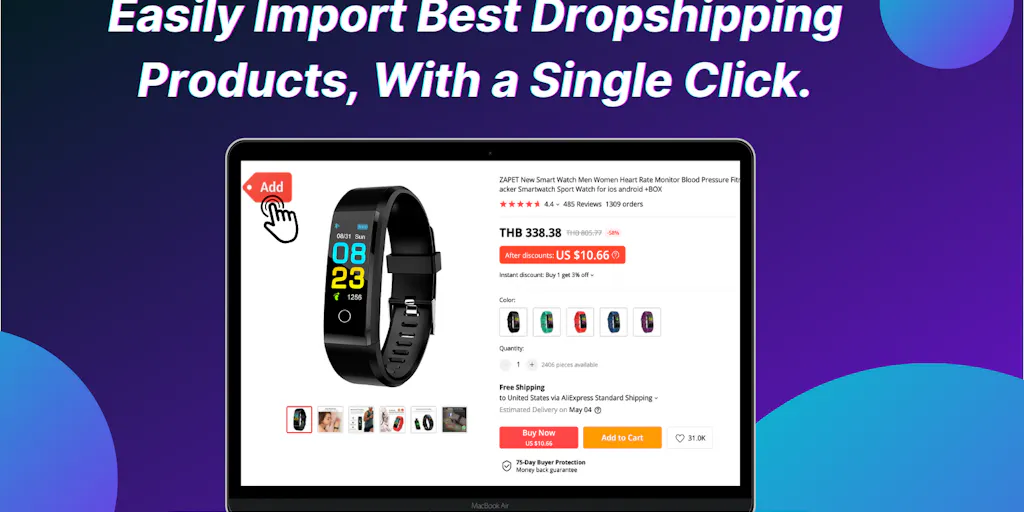
Importify - Import from 25+ Marketplaces Automatically

Import winning dropshipping products in one click, powered by AI.

Droplytics.io - Real-Time Winning Products and Competitor Ads

Find winning dropship products and the ads scaling them in real-time.

Rovalty - Find AliExpress Products by Image

Find AliExpress products instantly with reverse image search

Sponsored
AT
Atoms: Turn ideas into products
Jubilee - US-Based Beauty Dropshipping, No Minimums

Launch your beauty brand with white label dropshipping - no MOQ, just quality.

Dropshipping tools let you sell products without holding inventory, forwarding each order to a supplier who ships directly to the customer. It lowers the upfront cost and risk of starting a store, though the trade-offs in margin and control are real and often underestimated.

How dropshipping tools work

These tools connect your store to supplier catalogs, import products with descriptions and images, and automate order forwarding so a sale routes to the supplier without manual steps. They sync inventory and pricing, and some handle order tracking, letting one person run a store that would otherwise need a warehouse.

Dropshipping in the e-commerce mix

Dropshipping apps plug into e-commerce platforms and Shopify apps, and rely heavily on product research to find items worth selling. Custom-printed goods are a related model covered under print on demand.

Frequently Asked Questions

What is the best dropshipping supplier platform?
AutoDS and DSers (AliExpress official partner) are the most used dropshipping automation tools. Spocket specializes in US and EU suppliers for faster shipping times. Zendrop offers US-based warehousing and private labeling. SaleHoo is a curated supplier directory. For beginners, DSers with AliExpress is the most accessible starting point; for serious businesses, US-based suppliers via Spocket or Zendrop improve customer experience.
Is dropshipping still profitable?
Dropshipping remains viable but is more competitive than in 2016-2019. Margins are thin (10-30%), customer service is challenging when you do not control fulfillment, and AliExpress shipping times of 2-4 weeks create poor customer experiences competing against Amazon Prime. Success requires differentiation: niche products with less competition, US-based suppliers for fast shipping, strong branding, and effective paid advertising or SEO-driven organic traffic.
What is print-on-demand vs. dropshipping?
Print-on-demand (POD) is a subset of dropshipping where products are printed/manufactured after each order - typically custom merchandise (t-shirts, mugs, phone cases) with your designs. Dropshipping sources existing wholesale products from suppliers. POD has zero inventory and no minimum orders, but margins are thinner and personalization is limited to your design library. Both eliminate inventory holding; POD trades some margin for creative product differentiation.
How does dropshipping work?
In dropshipping, you list a supplier's products in your store without buying inventory upfront. When a customer orders, you forward the order and payment details to the supplier, who ships the product directly to the customer, and you keep the difference between your retail price and the supplier's cost. You never handle the product physically. Dropshipping tools automate connecting to suppliers, importing products, and forwarding orders. This model removes the need for inventory investment and warehousing, making it low-cost to start, which is its main appeal for new online sellers.
What are the downsides of dropshipping?
The main drawbacks are thin margins, limited control, and intense competition. Because you buy at near-retail prices and many sellers offer the same supplier products, margins are slim and price competition is fierce. You do not control inventory, shipping speed, or product quality, so supplier problems, slow delivery, stockouts, defects, become your customer service problems. Long shipping times from overseas suppliers frustrate buyers. Standing out requires strong marketing, branding, and customer experience rather than the products themselves, since anyone can list the same items. Success is possible but harder than the low startup cost suggests.
Is dropshipping still profitable?
It can be, but it is more competitive than it once was, and easy profits are rare. Success now depends less on finding a 'winning product' and more on building a real brand, marketing effectively, choosing reliable suppliers with reasonable shipping, providing good customer service, and finding a niche or angle competitors lack. The model's low startup cost attracts many sellers, so differentiation matters. Profitable dropshipping businesses tend to treat it as a genuine business, focused on customer experience and marketing, rather than a quick scheme. The thin margins mean volume and efficiency are essential.