NextStair
Ad
ElevenLabs: AI Voice Generator | Sign Up Now FREE
Try Now

Best AI Code Review 2026

Browse AI code review tools that automatically analyze pull requests for bugs, security vulnerabilities, style violations, and performance issues. These tools work alongside or before human reviewers - providing instant feedback on every commit without reviewer bandwidth constraints. Compare coverage depth, false positive rate, GitHub/GitLab integration quality, and support for your language stack.

11 tools
Showing 1–11 of 11 tools
MatterAI - Frontier Models at 70% Lower Cost

Frontier AI models for coding & agents - 70% cheaper than competitors

ReviewPhin - Routine Bug Detection, Human-Focused Design Review

Self-hosted AI code review that finds bugs so humans can focus on design.

Macroscope - AI Engineering Insights

The AI code reviewer you won't want to turn off

VibeDrift - Keep AI Agents on Code Patterns

Stop your AI agent from forgetting your code patterns as your project grows

cubic - AI Code Review

The #1 AI code reviewer for complex codebases

CodeAnt AI - Automated Fixes for Security Issues

AI code review that cuts review time by 80% with one-click fixes

Typo - Measure AI's Impact on Code Quality

Measure AI's real impact on code, quality, and delivery

LaReview - Code Review Plans over Comment Spam

AI code review workbench that plans smart, not spams comments.
BugLens - Catches Security Bugs Before Merging

AI code reviewer that catches bugs before your team does
Judgie-AI - Automated Judging for Hackathons and Hiring

AI-powered evaluation platform for hackathons, pitches, and hiring
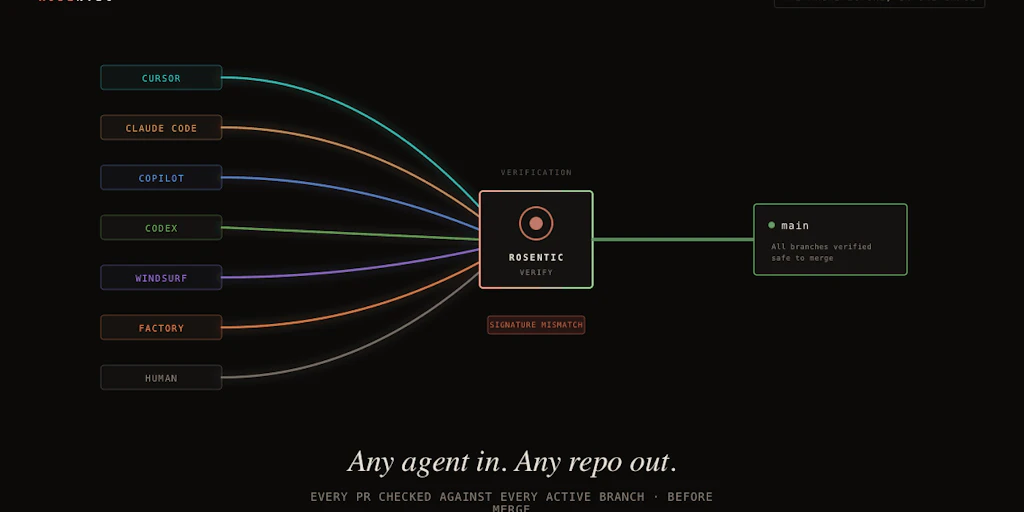
Rosentic - Detects Breaking Changes Across Branches

Catch breaking changes across branches before merge hits production.

Code review catches problems before they reach production, but human reviewers are slow, inconsistent, and easy to overload. AI code review tools add an automated reviewer that comments on every pull request instantly, flagging bugs, security issues, style violations, and performance concerns. It does not replace human review so much as handle the first, tireless pass.

Consistent, instant, everywhere

The advantage is coverage without fatigue. An AI reviewer applies the same scrutiny to every change at any hour, catching the routine issues so human reviewers can focus on architecture and intent. It integrates with GitHub and GitLab and leaves comments like a colleague would, available on the first commit rather than whenever someone gets to it.

Related quality tools

Review works with the rest of the quality stack. The debugging tools address bugs it finds, the test generation tools cover the same code with tests, and for security specifically, the security scanners and version control tools complete the picture.

Frequently Asked Questions

What AI tools do automated code review on pull requests?
CodeRabbit, Sourcery, and Qodo (formerly CodiumAI) are the leading AI PR review tools. They integrate with GitHub and GitLab to leave automated review comments on diffs. Amazon CodeGuru handles Java and Python specifically. Claude Code and GitHub Copilot also offer code review capabilities within their broader assistant features.
Can AI code review replace human code review?
AI code review catches a different class of issues than human review - it excels at style, common bug patterns, and security anti-patterns but misses architectural concerns, business logic correctness, and team-specific context. Best practice is AI review first to catch surface issues, followed by human review focused on design and intent.
What security issues can AI code review detect?
SQL injection, XSS vulnerabilities, insecure deserialization, hardcoded secrets, missing authentication checks, insecure direct object references, and use of deprecated cryptographic functions are commonly caught. Tools like Snyk Code and Semgrep specialize in security-focused analysis with fewer false positives than general AI reviewers.
How do AI code review tools work?
They integrate with your repository on GitHub or GitLab and automatically analyze each pull request or commit, leaving comments on potential bugs, security vulnerabilities, style issues, and performance concerns, much like a human reviewer but instantly and on every change. Tools like CodeRabbit, Sourcery, and Snyk Code are examples. They provide a consistent first pass so human reviewers can concentrate on higher-level questions of design and intent that automated review does not judge well.
Can AI code review replace human reviewers?
No, it complements them. AI review excels at the tireless first pass, catching routine bugs, style issues, and common vulnerabilities consistently on every change. It does not understand your product's intent, architecture, or business context the way a human reviewer does, so it misses issues of design and appropriateness. The productive model is AI handling the mechanical, repetitive checks so human reviewers spend their limited attention on the judgment calls that matter most.
Are AI code review tools worth it for small teams?
Often yes, because they add consistent review coverage that a small team, with few available reviewers, otherwise lacks. Catching routine bugs and security issues automatically on every pull request raises quality without adding reviewer workload, and many tools have affordable or free tiers. The value is highest where review would otherwise be light or skipped under time pressure, which is common on small teams, so the automated safety net is genuinely useful there.