
NextStair
Ad
ElevenLabs: AI Voice Generator | Sign Up Now FREE
Try Now

Best Keyword Research 2026

Find dedicated keyword research tools that uncover search volume data, keyword difficulty scores, related questions, trending topics, and competitive gap analysis. These tools help you identify the specific terms your target audience uses and prioritize which keywords offer the best ranking opportunity relative to difficulty. Compare database size, freshness, difficulty scoring methodology, and SERP data integration.

9 tools
Showing 1–9 of 9 tools
SEO Signal - Prioritize Updates from Search Console Data

Turn GSC data into a prioritized SEO action queue.

Keyword Research Tool - Search Volume and Difficulty Metrics

Free keyword research tool with search volume and difficulty metrics

KeywordOrbit - 50K Long-Tail Keywords from One Seed

50,000+ long-tail keywords from one seed, live from Google

Build The Keyword - Validate Ideas Before Building

Find profitable business ideas with proven Google search demand

EagleKGR - Batch Process 100+ Keywords in Minutes

Analyze 100+ keywords in 10 minutes with automated KGR calculation

Semantic Pilot - Keywords, Ads, and SEO Rankings Together

AI-powered keyword research, SEO, and Google Ads optimization in one platform
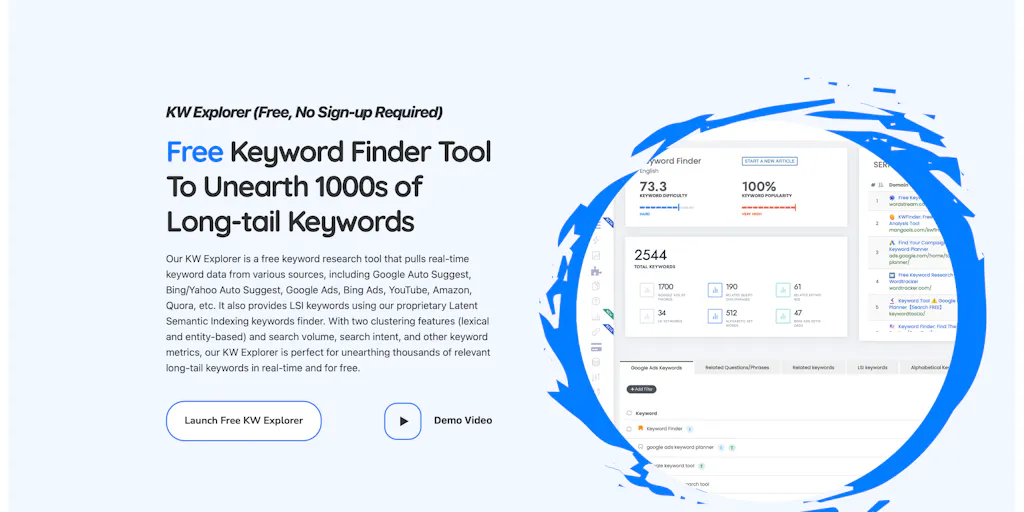
Allintitle - 26M Keywords, No Signup Required

Free real-time keyword research with 26M+ keywords, no sign-up needed

KIVA (By Wellows) - Track Citations Across AI Search

Track your brand in AI search and get cited more, faster.

Sponsored
P
Printify
another keyword tool - Google Search Data, Zero Cost

Free keyword research synced live from Google - no expensive setup required

Keyword research is where good SEO begins, because ranking for a term nobody searches, or one you cannot realistically win, is wasted effort. These tools reveal what people actually search, how often, and how hard each term is to rank for, so you aim content at real, winnable demand.

What keyword research tools show

They surface search volume, difficulty, related terms, and search intent, turning guesswork about topics into data. The best insight is often finding lower-competition terms with genuine demand that bigger sites overlook.

Using keyword research well

Data guides strategy, but you still choose which terms fit your site and audience. Feed the findings into the AI SEO writers for content, pair with content research, and the full SEO suites bundle this in.

Frequently Asked Questions

What is keyword difficulty and how is it calculated?
Keyword difficulty (KD) is a score (typically 0-100) estimating how hard it is to rank on the first page of Google for a given keyword. It is calculated based on the strength of currently ranking pages - their domain authority, backlink counts, and content quality. High KD scores mean competitive niches dominated by strong established sites.
What is the best free keyword research tool?
Google Search Console provides actual search query data for your own site for free. Google Keyword Planner gives volume ranges. Ubersuggest offers limited free searches. AnswerThePublic surfaces question-based queries visually. For comprehensive research without paying, combining these free tools covers most basic keyword research needs.
What are long-tail keywords and why do they matter?
Long-tail keywords are more specific, lower-volume search queries (3+ words) that collectively represent the majority of all searches. They are typically lower competition, higher intent, and easier to rank for than broad head terms. New and smaller websites should prioritize long-tail keywords where they can realistically compete and drive qualified traffic.
Why is keyword research important for SEO?
Because it tells you what people actually search for, how often, and how competitive each term is, so you create content aimed at real, winnable demand rather than guessing. Ranking for a term nobody searches is wasted effort, and targeting one too competitive to win is futile. Keyword research grounds your content strategy in data, often revealing lower-competition terms with genuine demand that larger sites overlook, which is where smaller sites find opportunities to rank. It is the foundation that makes the rest of SEO effort pay off.
What makes a good keyword to target?
A good keyword combines genuine search demand with competition you can realistically compete for, and intent that matches what you offer. High-volume terms are often too competitive for smaller sites, so the sweet spot is frequently longer, more specific terms with clear intent and less competition. Relevance matters too, ranking for a term that does not match your content or audience brings traffic that does not convert. The best targets are winnable, wanted, and well-matched to your site's purpose.
Are free keyword research tools good enough?
Google Keyword Planner, Google Search Console, and free tiers of tools like Ubersuggest and Ahrefs Webmaster Tools offer real value and are a fine starting point, especially for beginners and small sites. For serious, ongoing SEO, paid tools provide more accurate volume data, deeper competitive insight, and larger keyword databases that speed up the work and sharpen decisions. Start free to learn the fundamentals, and upgrade to a paid tool when the better data and efficiency justify the cost for your workload.