

Best LLM Deployment 2026
Explore platforms and tools for deploying large language models in production - hosting model inference, managing GPU infrastructure, scaling to demand, and monitoring performance. Running LLMs in production requires specialized infrastructure for throughput, latency, and cost optimization. Compare supported models, inference speed, GPU access, pricing per token, and managed vs. self-hosted options.

.svg)
30+ free Minecraft tools for building, servers, and calculations

Train ML models on your iPad with live predictions and visual controls

Enterprise control plane for observing and securing production AI agents

One API for all AI models - serverless, fast, and OpenAI-compatible
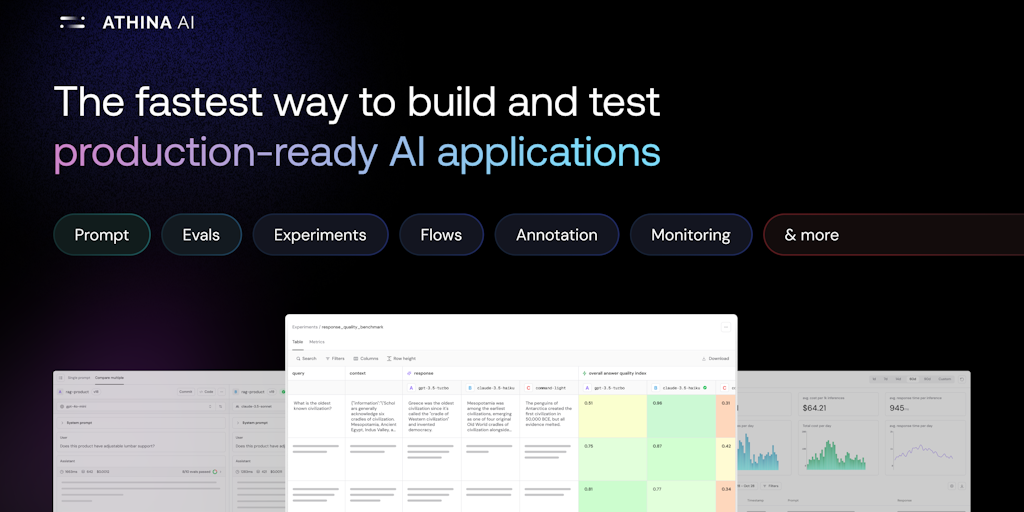
Ship AI to prod 10x faster with collaborative development & monitoring

Intelligent model routing that automatically improves from your production traffic

Trace, manage, and evaluate LLM apps from prototype to production at scale

Enterprise AI data platform with sovereign storage and 100+ language support

Deploy full-stack apps in 15 seconds - no engineer required.

Build durable AI agents in TypeScript that survive anything
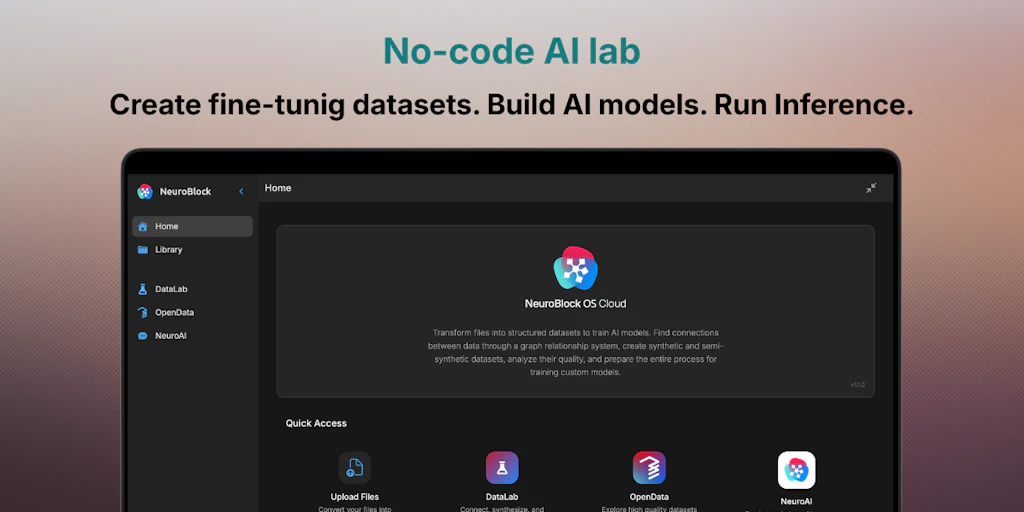
Build your own expert AI models - own the innovation, cut the costs
Getting a language model from development into reliable, scalable production is its own challenge, and LLM deployment tools handle it. They manage serving models efficiently, scaling to demand, optimizing latency and cost, and monitoring, so an AI application performs well under real-world traffic.
What LLM deployment tools do
They serve models as reliable, scalable endpoints, optimizing inference speed, cost, and throughput, and handling scaling and monitoring, so your application delivers good performance in production. This is especially involved for self-hosted models.
Deployment and infrastructure
Deployment runs on specialized infrastructure, so these connect to the AI hosting platforms and serve the open-source AI models you deploy.