

Best Database Tools 2026
Browse database management tools that provide visual interfaces, query builders, schema designers, and migration management for SQL and NoSQL databases. These tools make database work accessible without memorizing syntax for every operation. Compare supported databases (PostgreSQL, MySQL, MongoDB, Redis), query intelligence, schema visualization, collaboration features, and cloud database integration.

.svg)

Powerful cross-platform database management for SQL & NoSQL workflows

The 11 MB database manager that leaves Electron in the dust

WordPress-like editor for your Supabase database - no schema lock-in.

One app for all your PostgreSQL databases. No cloud, no clutter.
Native macOS MongoDB client built for speed and local control
Query your files with SQL - right inside VS Code, no setup required.

Query PostgreSQL in plain English from your terminal

HTTPS edge proxy for AI agents and serverless to reach Redis, Postgres & databases

AI Database Engineer: Generate SQL 10X faster, boost queries 100X, maintain 99.9% uptime
Type-safe ORM and full-stack TypeScript infrastructure for modern applications
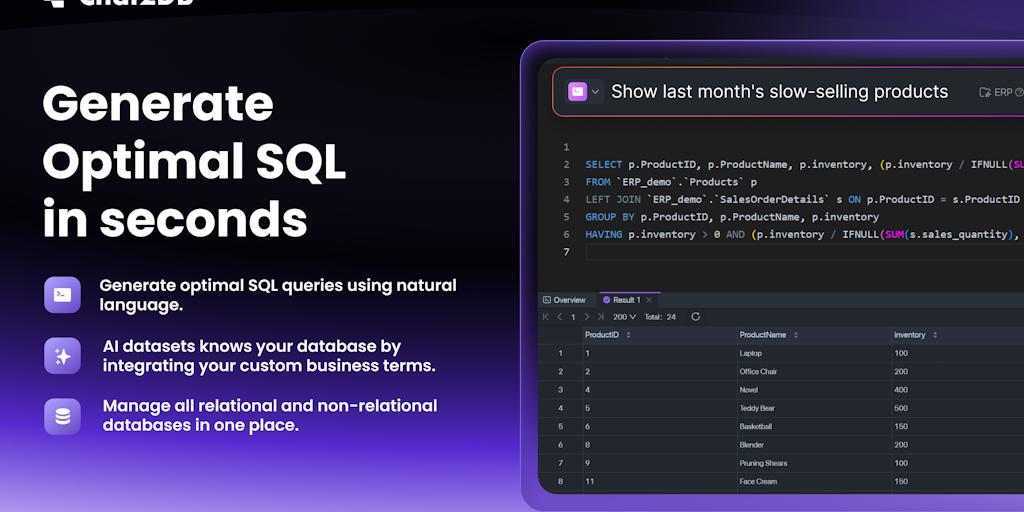
AI SQL client for all databases - local, fast, and open source.

Design database schemas offline, sync with your team, connect live databases

Scale Postgres n times with zero app changes

Database interaction tool built for developers using TypeScript

Query all your cloud databases in plain English - no SQL required
Data is the heart of most applications, and database tools are how developers manage it, designing schemas, running queries, and administering the databases that store everything. From GUI clients to administration platforms, these tools make working with databases efficient and safe.
What database tools do
They provide interfaces to connect, query, design, and manage databases, visualizing data, running SQL, and handling administration, so developers work with data without wrestling raw command lines. Many now add AI query assistance.
Databases and AI
AI now helps write and optimize queries, so these pair with the AI SQL tools, and no-code teams use the no-code backend tools instead.