
NextStair
Ad
ElevenLabs: AI Voice Generator | Sign Up Now FREE
Try Now

Best Help Desk Software 2026

Find helpdesk and customer support ticketing software that manages incoming support requests across email, chat, phone, and social media - assigning, tracking, and resolving issues systematically. These platforms are the operational backbone of support teams. Compare omnichannel intake, automation and routing capabilities, SLA management, knowledge base integration, and reporting on team performance.

14 tools
Showing 1–14 of 14 tools
GetGro.io - Grow Your Business with AI

AI-powered customer support platform that unifies channels and automates responses

R

Auto-generate personalized Google review replies in seconds with AI

Helpdesk by LabiDesk - Shared Inboxes Plus Knowledge Base

All-in-one helpdesk to engage leads and delight customers
Kriseena - Ecommerce Support with Confidence Scoring

AI support agent that knows when it's not sure
Zendesk - Self-Improving Agents Handle Complex Workflows

Self-improving AI agents that resolve faster and learn from every interaction

ReleaseDock - AI Chat Plus Help Center Widget

AI support, help center, and announcements in one branded widget

Clanker Support - AI Answers from Docs, Human Handoff

AI support that escalates - answers from your docs, hands off to humans instantly.

Fin - Resolves Complex Customer Inquiries Automatically

AI customer agent with 76% resolution rate, trusted by 12,000+ brands
HelpDesk - AI-Powered Ticketing in One Inbox

Handle 10x more support cases with AI-powered ticketing in one inbox
Sponsored
P
Printify
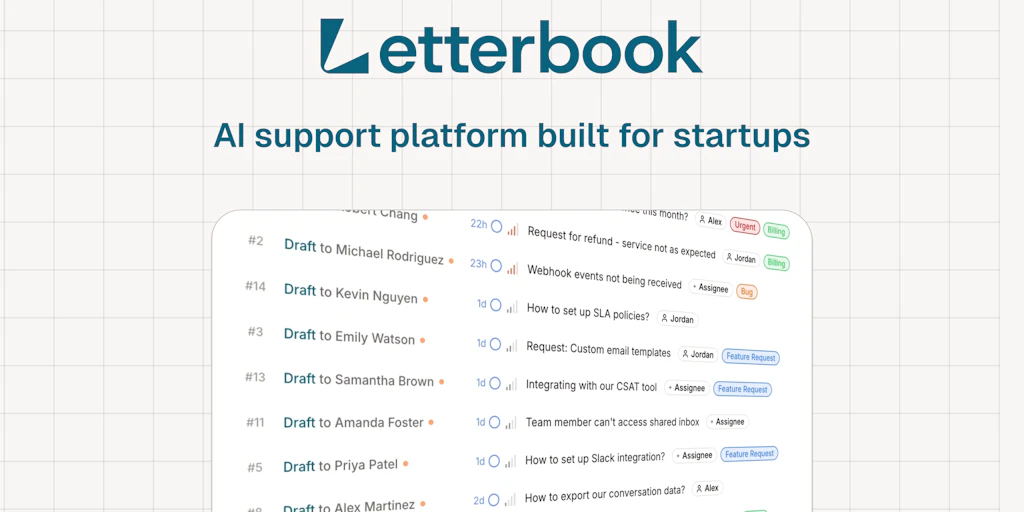
Letterbook - Support Agent Using Your Customer Data

AI-native support platform that solves tickets alongside you

Hoory AI - Chatbots with 85% Ticket Resolution

AI customer service that scales your support 24/7 with 85% automation
ReplyFlow - AI Replies in 50+ Languages

Reply to customers 10x faster with AI-powered professional responses

Typewise - Multi-Channel Agent in 15 Minutes

Launch AI customer service agents in 15 minutes with human control.

Zoona AI - Resolves Support Tickets, Not Just Replies

AI that resolves customer queries 24/7, not just replies to them

Help desk software organizes customer support requests into a ticketing system, so questions from email, chat, and social all land in one queue that a team can prioritize, assign, and resolve without anything slipping away. It turns scattered support into a managed process.

What help desk software does

A help desk converts every incoming request into a trackable ticket, routes it to the right agent, and keeps the full conversation history in one place. Automation handles routing, priority, and canned responses, while reports reveal response times and recurring issues worth fixing at the source.

Help desk in the support stack

A help desk anchors support and connects to live chat for real-time questions, knowledge bases for self-service, and chatbots that deflect common tickets before a human is needed.

Frequently Asked Questions

What is the best helpdesk software for small businesses?
Freshdesk has the most generous free tier - up to 10 agents with email ticketing, knowledge base, and basic reporting. Zendesk is the enterprise standard with the richest feature set. Help Scout focuses on email-based support with a human, non-ticket-number experience. Intercom combines helpdesk with proactive customer messaging. For B2B SaaS specifically, Intercom's product context integration is particularly valuable.
What is an SLA in customer support?
An SLA (Service Level Agreement) defines committed response and resolution times - for example, 'first response within 2 hours for priority 1 tickets.' Helpdesk software tracks SLA compliance, escalates tickets approaching breach, and reports on breach rates. SLAs set customer expectations and create accountability for support teams. External SLAs are contractual obligations; internal SLAs are operational targets.
What is the difference between helpdesk and live chat?
Helpdesk software manages asynchronous support - tracking email threads and tickets across time with full conversation history and team collaboration. Live chat handles real-time synchronous conversations through a website chat widget. Many modern platforms (Intercom, Zendesk, Freshdesk) include both, with chat conversations converting to tickets when agents are offline or the issue requires follow-up.
What is the difference between a help desk and a service desk?
A help desk is focused on resolving customer or user issues, answering questions and fixing problems through a ticketing system. A service desk is broader, part of IT service management, and handles not just incidents but service requests, changes, and the overall relationship between IT and the business. In short, a help desk is reactive and problem-focused, while a service desk takes a wider, more strategic view of delivering services. Many small teams use 'help desk' loosely for any support ticketing, but in ITSM the distinction is meaningful.
How does ticket routing work in help desk software?
Ticket routing automatically directs each incoming request to the right agent or team based on rules you set: the topic, the customer's plan, the channel, keywords, or agent availability and workload. This ensures a billing question reaches the billing team and an urgent issue reaches someone quickly, rather than every ticket landing in one undifferentiated pile. Good routing reduces response times and prevents tickets from being missed or bounced between people. Some systems use skills-based or AI-assisted routing to match tickets to the best-suited agent.
What support metrics should a help desk track?
The most useful metrics include first response time (how quickly you reply), resolution time (how long to close a ticket), first contact resolution rate (share of issues solved in one interaction), ticket volume and trends, and customer satisfaction scores from post-resolution surveys. Tracking recurring issue types is especially valuable, since it reveals problems worth fixing at the source or documenting in a knowledge base. Together these metrics show whether the team is fast, effective, and improving, and where to focus to reduce both effort and customer frustration.